


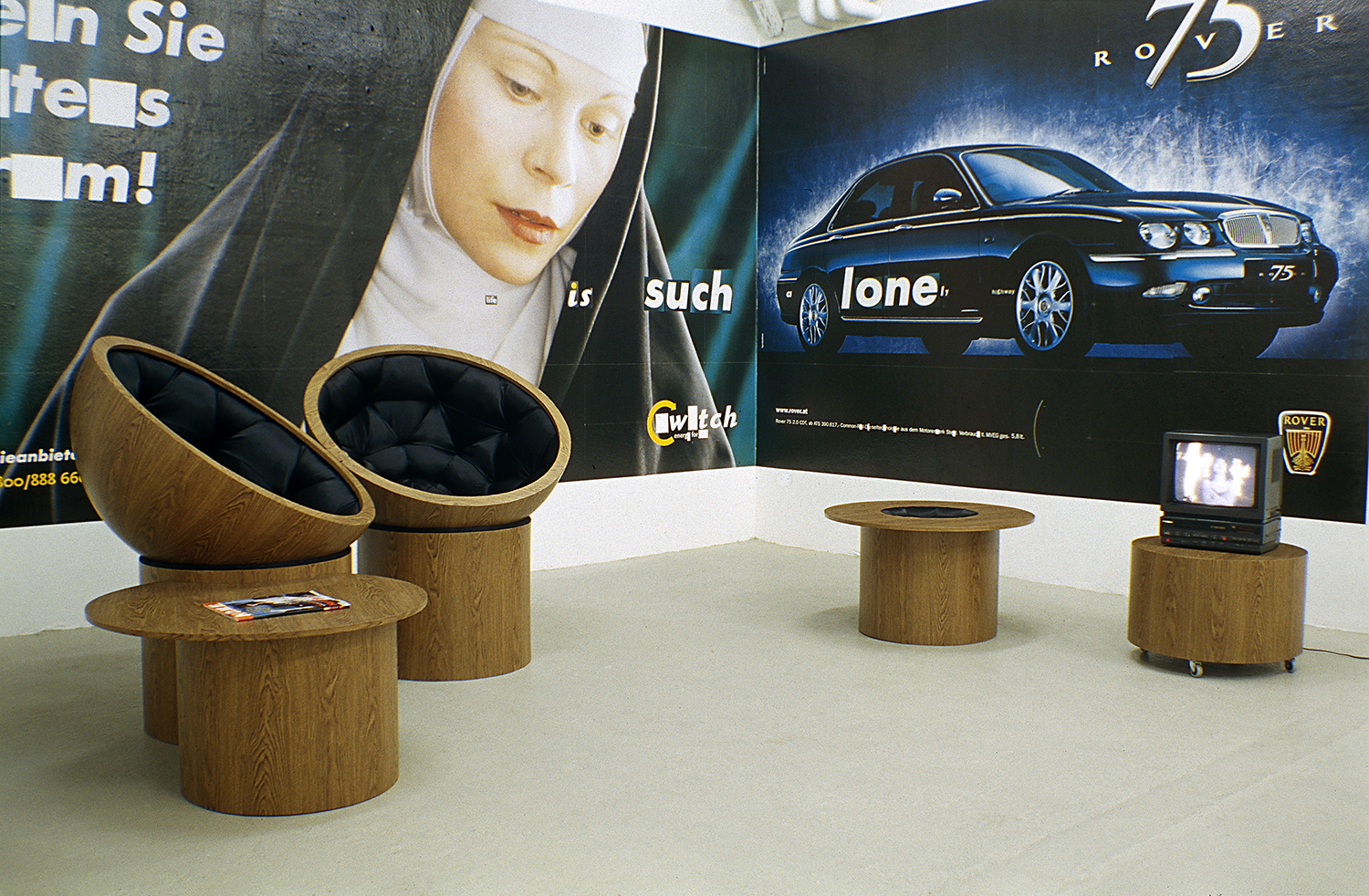
Love Lounge 1, upholstered convertible sphere, manipuliated
advertisement posters, manipulated
H.O.M.E. magazine, video
Kulturwerkstatt Haus 10, Fürstenfeldbruck, D, 2002

Love Lounge 1, detail
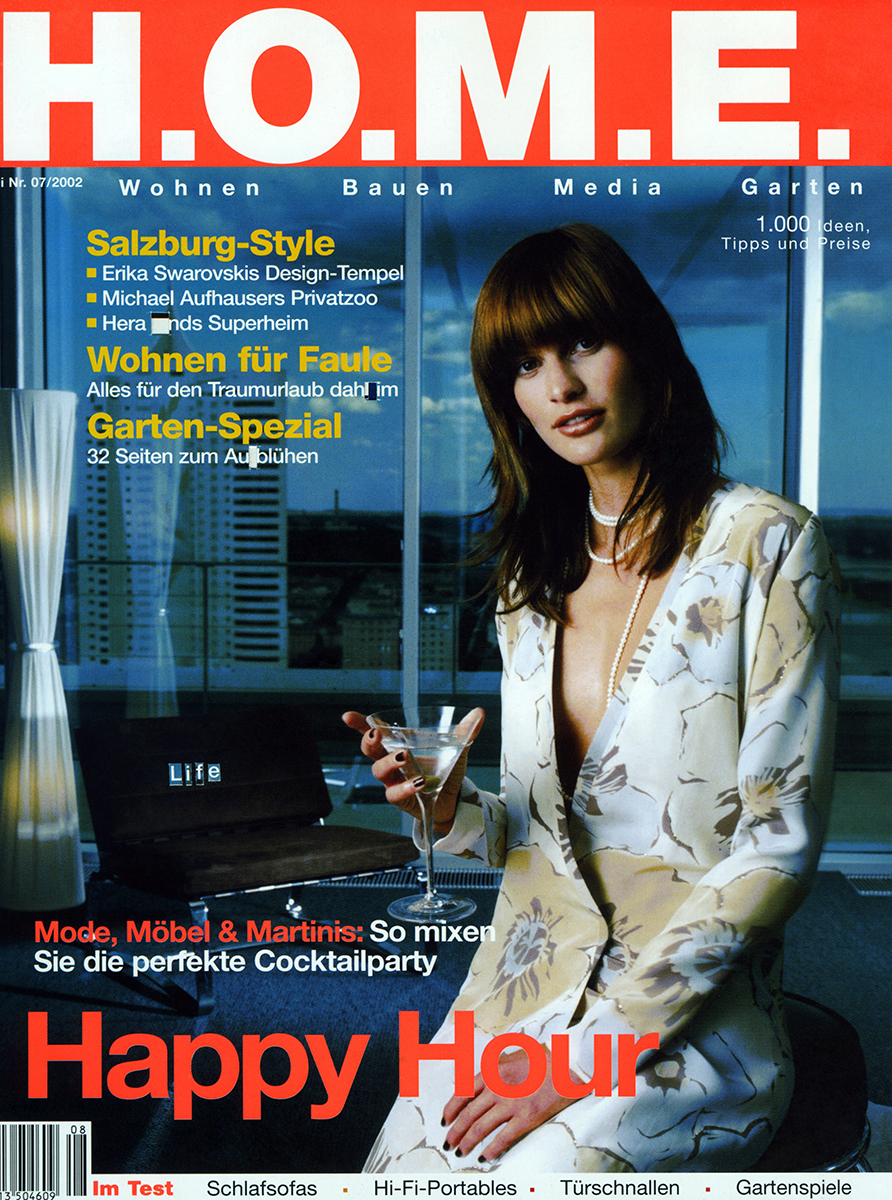
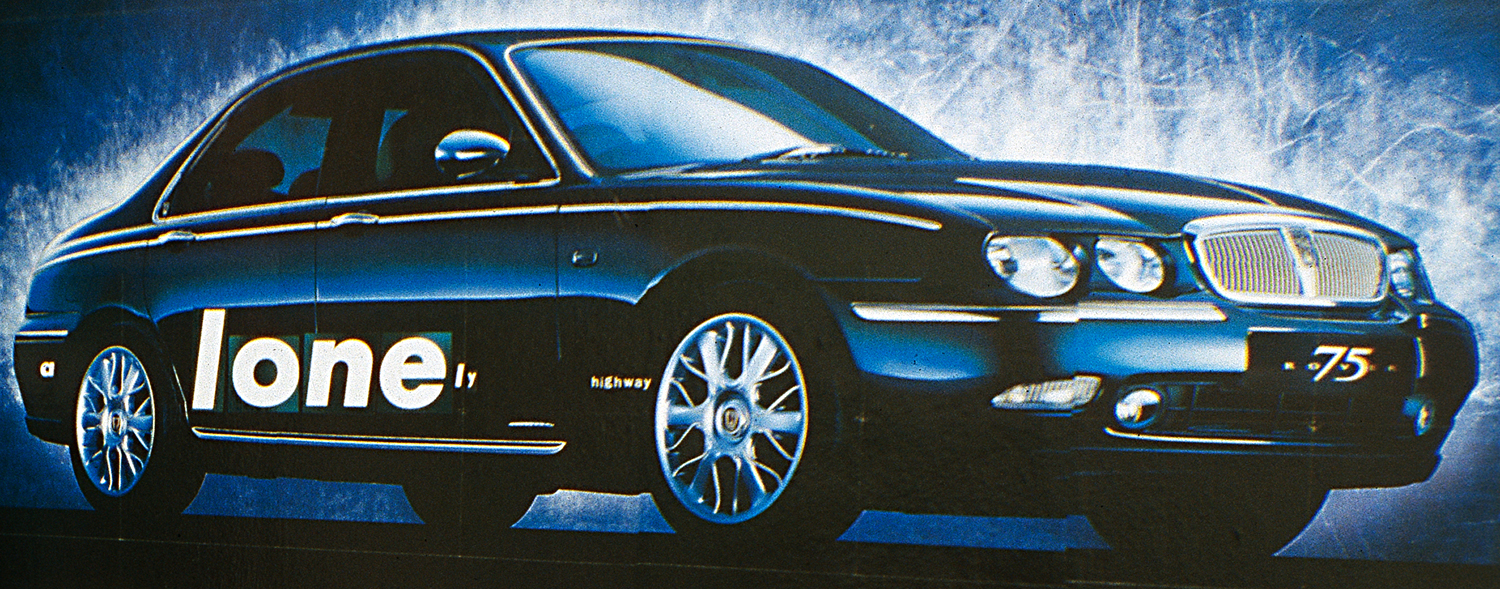
When you enter Johannsen`s work Love Lounge 1, you are reminded of a living room interior from the 1970s. Two armchairs, a side table covered with a magazines, a television showing the same music video over and over again – visitors are invited to take a seat in a basic setting that they might expect to find in their own home, perhaps with a few variations. Instead of wallpaper, we find large-format advertising posters promoting an alternative energy supplier and a luxury car. However, this living room is not very cosy: the hemispherical armchairs turn out to be completely collapsible spheres that are difficult to sit in, and the video insistently repeats the intro to Madonna's song ‘Like a Prayer’: ‘Life is a mystery, everybody stands alone, I hear you call my name and it feels like home.’ The video is slightly slowed down, which lends Madonna's movements and words a poignant drama. The song text is also cut into the H.O.M.E. home magazine lying on the side table, and the text on the advertising posters is manipulated by incisions. The advertising texts are taken from a quote from a banal Lenny Kravitz song, ‘life is such a lonely highway,’ and mounted on the posters like an anonymous threatening letter.
(...) Ulrike Johannsen approaches the workings of eroticism in her own way. Her ‘Love Lounge 1’ does not catapult you into the eccentric no-man's-land of love. Instead, the place of promise is moved inward, into a padded, completely closable sphere. But this inner world – lined with black satin – also remains a utopia (ou topos means ‘no place’ in Greek), because you cannot sit inside the shell. The artist plays seductively with the promises of happiness in consumer capitalism, which are also evoked by the two advertising posters featuring a nun and a luxury limousine. Here, the divine becomes a function of advertising and awakens a need that ultimately cannot be satisfied. It is reminiscent of Roland Barthes, who once compared the new Citroën to Gothic cathedrals: "There is both perfection and a lack of origin in the object, a transformation of life into matter (matter is more magical than life)”. (...)
Andreas Höll